Choosing your floor
Light or Dark Flooring: How It Changes a Room
Light, contrast, furniture and visual maintenance: a guide to deciding the tone without relying on a small sample alone.
Floor colour does not act on its own. It changes with the light, the walls, the furniture and the surface it covers. That is why a small sample can be misleading.
What does a light floor do?
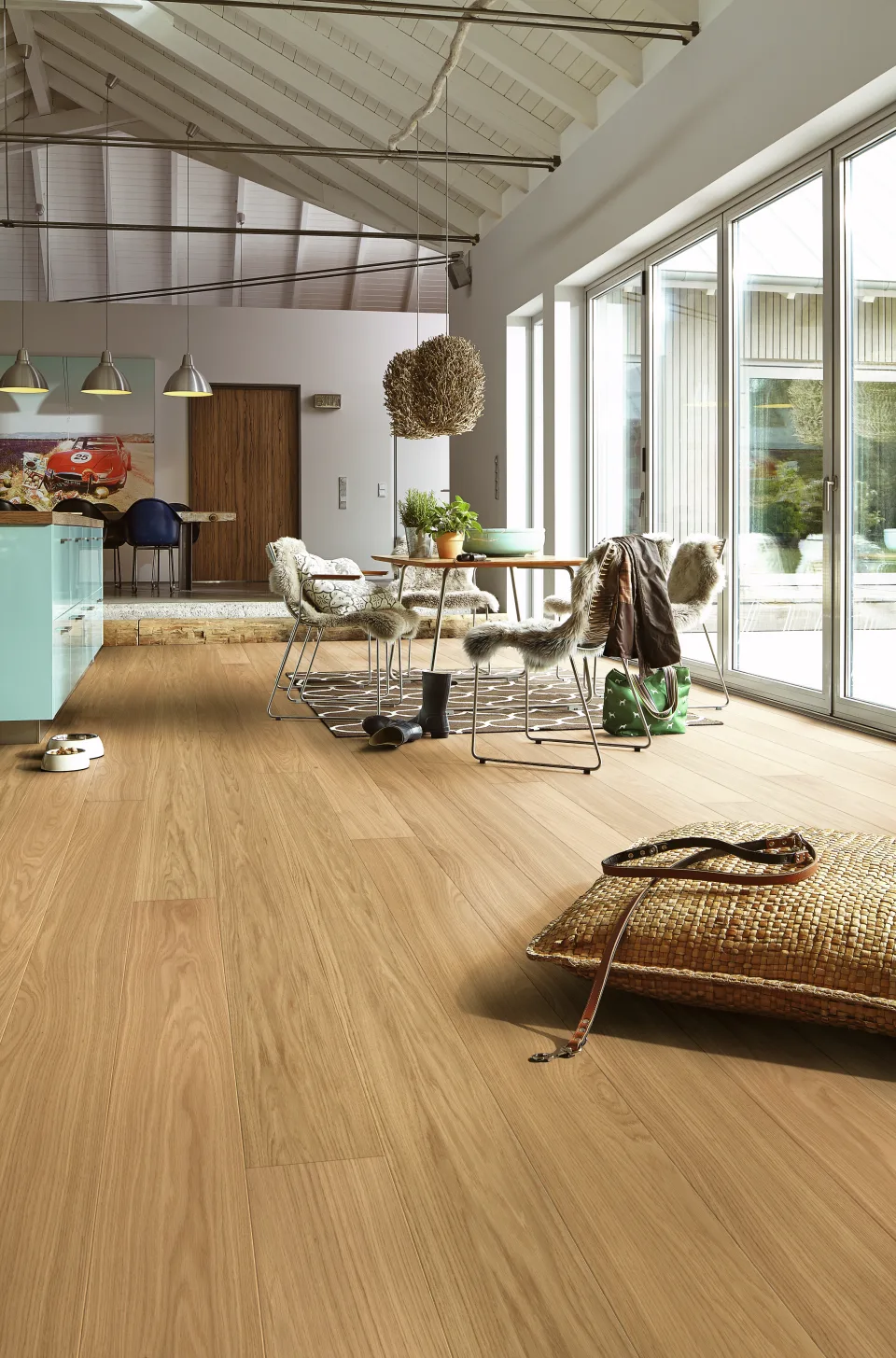
It tends to increase the feeling of brightness and continuity, especially combined with light walls. It can also create a calm background for furniture with more presence.
What does a dark floor do?
It can bring depth, contrast and a very architectural feel. It does, however, need a careful relationship with lighting, visible dust and the other materials.
Does light mean cold?
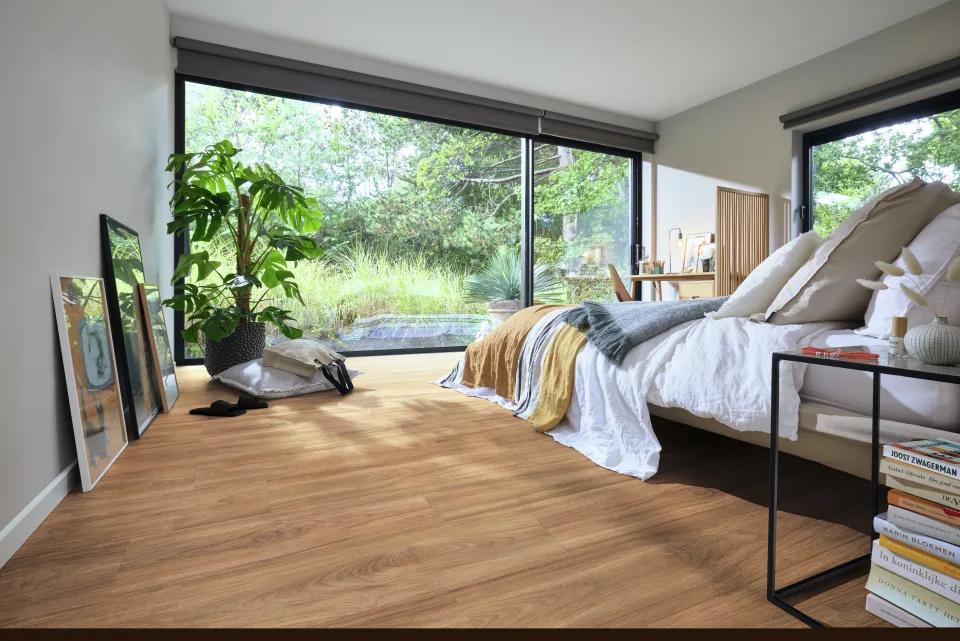
A light oak with warm undertones can feel much cosier than a greyish mid-tone. Besides the brightness value, look at the undertone, structure and finish.
Do dust, hair and marks show more?
Very dark, uniform floors can show light dust more; very light ones can make certain dark residues visible. Structures with variation and grain are usually forgiving to look at in busy homes.
How do you match the floor to the architecture?
Doors, kitchen, joinery and large furniture matter more than a seasonal trend. The floor will be one of the largest surfaces in the home.