Choosing your floor
Herringbone or Plank Flooring: Which Format Fits?
Rhythm, scale, direction and personality: when a herringbone pattern adds value and when a long plank lets the space breathe better.
Herringbone draws attention to the floor. A plank can make the floor disappear into the architecture. Neither option is better: they tell different stories.
What does herringbone bring?
Rhythm, geometry and a more decorative look. It works especially well when you want the floor to be a feature and there is enough space to appreciate the pattern.
What does a long plank bring?
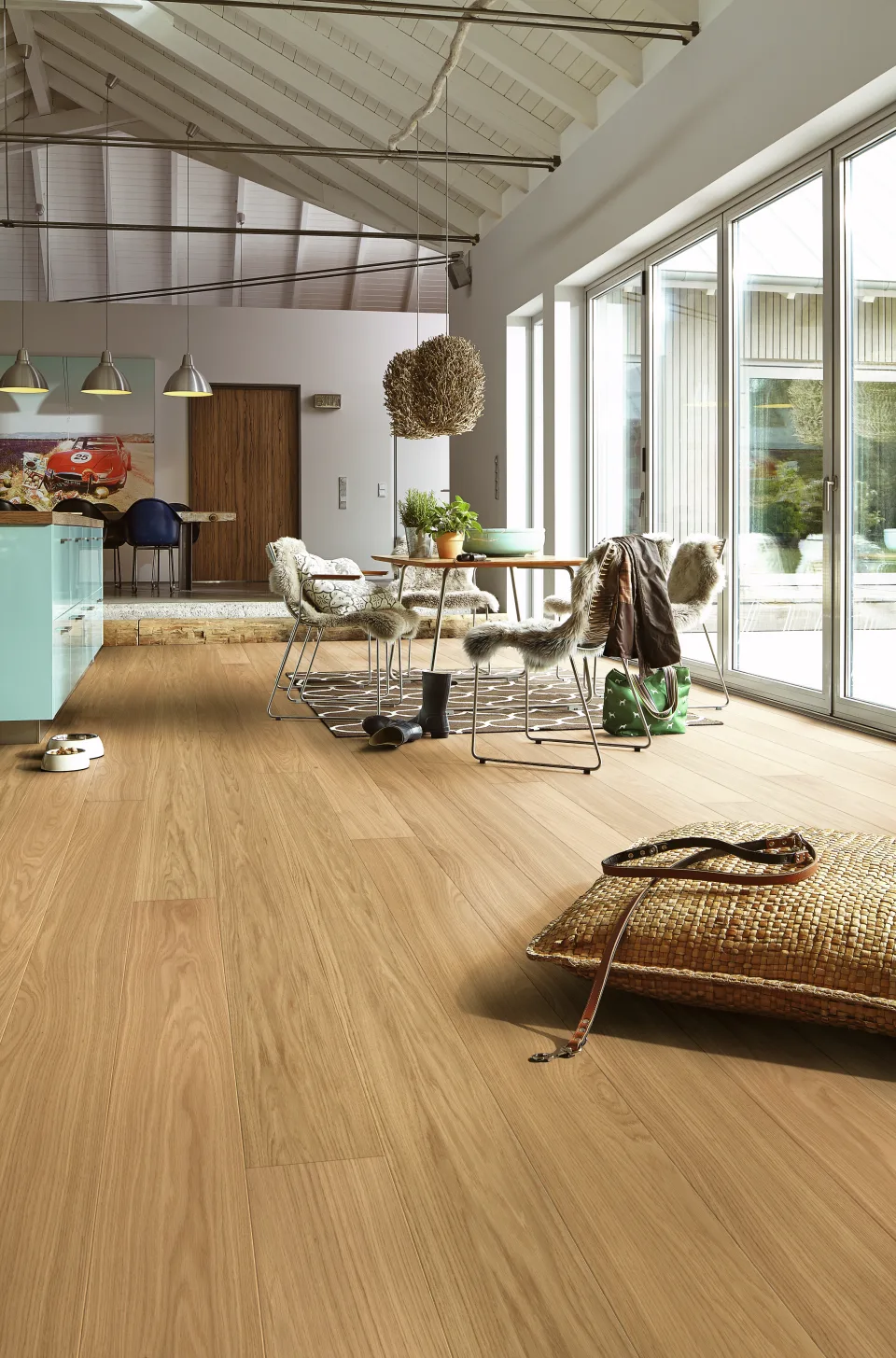
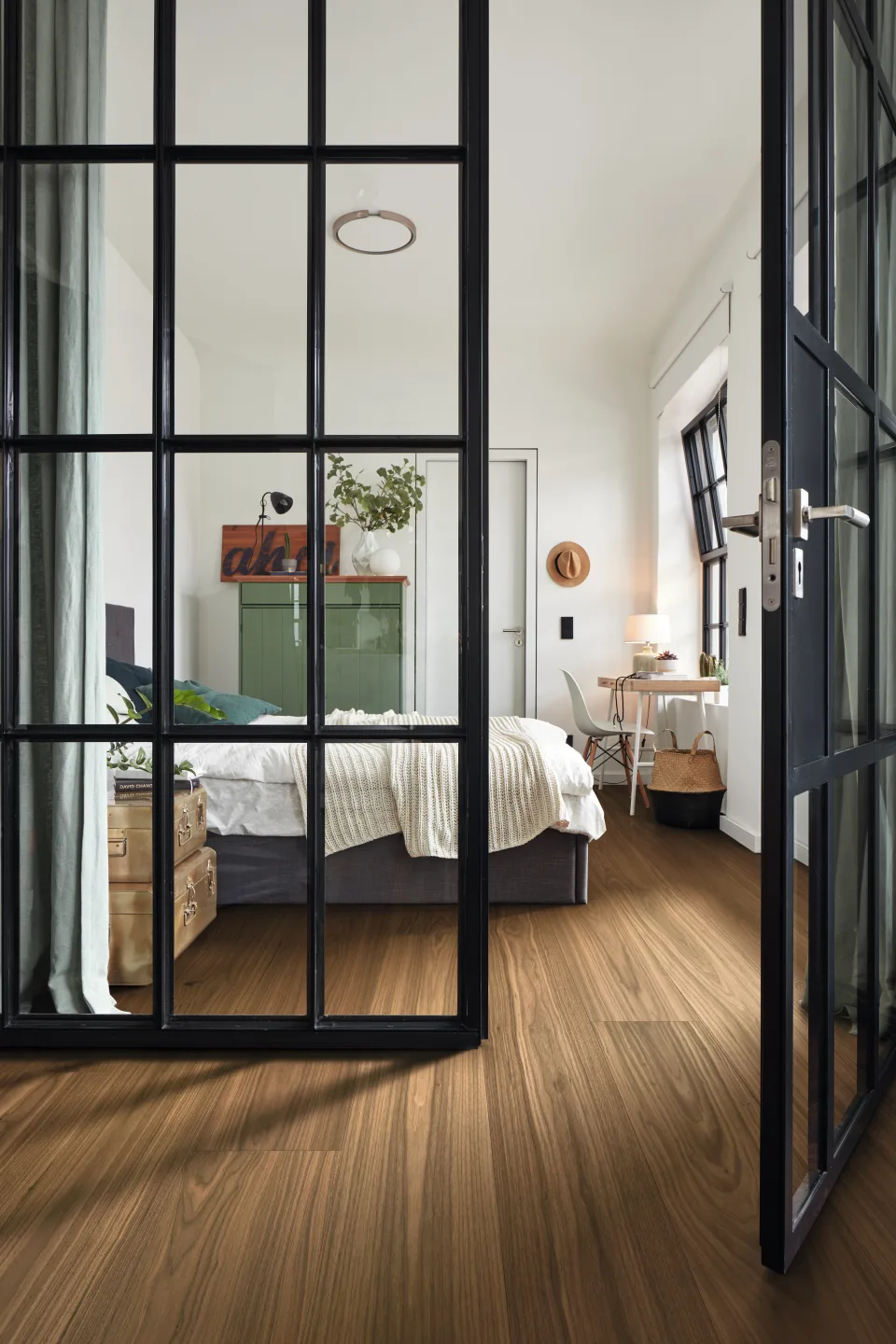
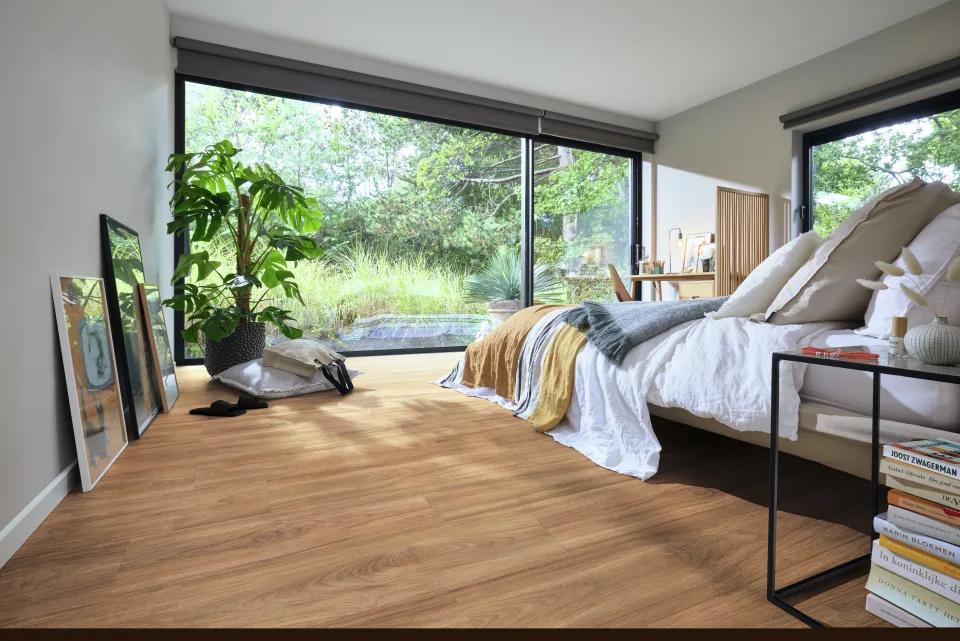
Continuity and visual calm. In generous formats it can emphasise the length of a room and let the wood or décor speak with fewer interruptions.
What suits small rooms?
A small herringbone can add scale and character, but a pattern that is too dense can also overload a space. The decision should be tested with the real size of the piece, not just a photograph.
And open-plan spaces?
In living rooms connected to the kitchen and dining area, a continuous plank can unify the whole. Herringbone, on the other hand, can turn the entire floor into an intentional composition if the setting out is well resolved.
Why try both?
Use real samples or a visualisation of the space to compare. The format changes how a room is perceived much more than it seems in a catalogue.